Making the Desert Island Discs Dataset: Data Visceralization and How We Don't Know What We Know
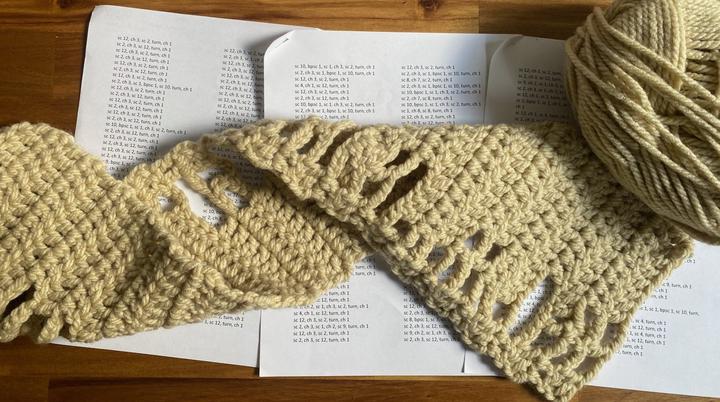
This collaborative digital humanities project served as the capstone for my certificate in the Digital Humanities. For this project, I and my co-researchers generated a collection of “data visceralizations,” or representations of data that don’t rely solely on sight. In our case, these included physical objects, sound compositions, and interactive experiences. These outputs are intended to serve as “knowledge objects” that give audiences the opportunity to experience the processes of creating and working with data, contributing to critical understandings of data as a product. By pointing to the human intervention needed in computational processes and engaging the audience through different modalities, we aimed to expand the developing canon of the Digital Humanities and encourage critical approaches to knowledge creation across the field.
Methods
This project was authored by a group of 5 researchers including myself, fellow students Carol Choi, Jessika Davis, and Ava Kaplan, and faculty member John Decker. We worked together as co-researchers to collaboratively scope the project, source a dataset, and document our work and references on a project website.
My role
For my individual contribution, I used OpenRefine and R to convert a binary representation of the dataset into a crochetable pattern. From the pattern, I created a textile representation of data and authored an accompanying narrative connecting my “data visceralization” to the project goals and existing scholarly work across the fields of digital humanities, critical data studies, media studies and computing history.
Learning Outcome Achieved: Technology
This project demonstrates my understanding of the programming language R and the data manipulation tool OpenRefine. I undertook a creative application of these tools to the task of creating a crochet pattern out of a dataset via scripting. In the narrative detailing my process, I articulated problems I encountered when using these tools, and outlined my problem-solving process.
Learning Outcome Achieved: Ethical/Creative/Critical Practice
This project is a critical investigation of the efficacy of traditional visualization formats and what they obscure. It offers data “visceralization” as an alternative display format that can both communicate the labor, time, and subjectivity involved in data collection, processing, and analysis, and engage a wider audience. As a direct response to trends in digital humanities research, this project shows a detailed understanding of the field of digital humanities, and demonstrates an ability to creatively reflect on our own digital humanities practices.